How to Get Yellow Out of White Shirts: 6 Easy Fixes
Few wardrobe mishaps are as frustrating as pulling a white shirt from the laundry, only to find it speckled with mysterious yellow stains. These blemishes are typically the result of a combination of sweat, aluminum in deodorant, and the residual buildup from everyday products. Before you resign the garment to a life of colored clothing, understand that these stains are often reversible with the right approach. Treating yellowed fabric effectively requires a blend of mechanical action and chemical solutions tailored to the specific cause of the discoloration.
Identifying the Source of the Yellowing
To effectively remove yellow stains, you must first diagnose their origin. The most common culprit is a reaction between the minerals in sweat and the aluminum compounds found in most antiperspirants. This creates a yellowish-grey ring exactly where the sleeve meets the underarm. Another frequent cause is the buildup of detergent, fabric softener, or hard water minerals, which can accumulate over time and create a dull, yellow appearance on the collar or cuffs. Understanding whether your stain is biological or chemical will dictate the best treatment method.
Pre-Treatment for Deodorant Stains
If the yellowing is concentrated in the underarm area, your primary goal is to break down the protein and mineral bond created by the antiperspirant. Relying solely on laundry detergent in the wash cycle is often insufficient for these set-in stains. Effective pre-treatment is the critical first step. Before washing, apply a targeted solution directly to the stained area and allow it to work for at least 15 minutes to penetrate the fibers.


- Liquid Laundry Detergent: Apply a few drops of heavy-duty liquid detergent directly to the stain and gently rub the fabric together to work it into the fibers.
- White Vinegar: Soak a cotton ball or cloth in white vinegar and dab it onto the stain. The acid helps dissolve the mineral crystals blocking the fabric.
- Baking Soda Paste: Mix baking soda with a few drops of water to form a thick paste and apply it to the affected area to lift the residue.
Advanced Stain Removal Techniques
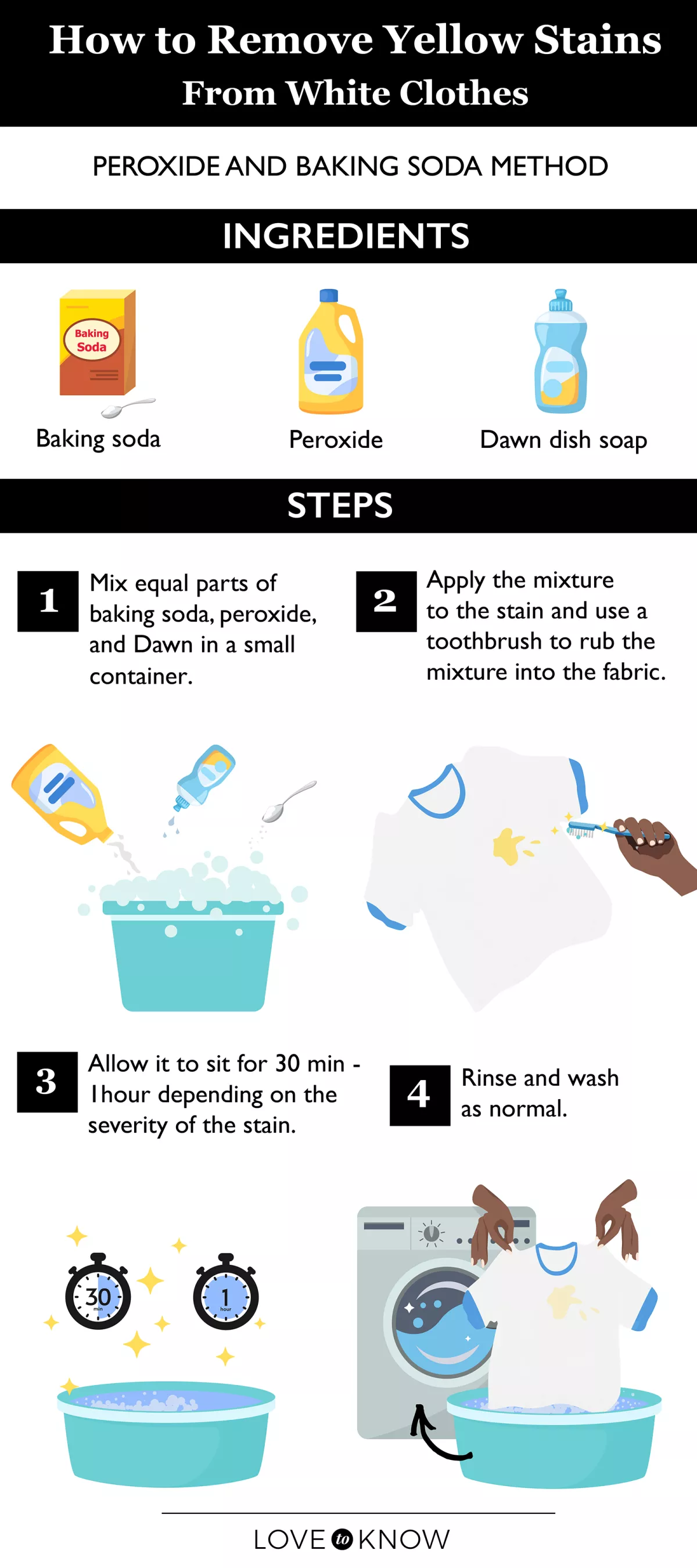
For older or more stubborn yellow stains, especially those caused by body oils or water hardness, a more aggressive chemical approach is necessary. Oxygen-based bleach is highly effective on white fabrics and is generally safer than chlorine bleach for most modern fabrics. This method tackles the stain without damaging the integrity of the cotton fibers. Alternatively, a paste of baking soda and hydrogen peroxide can be left on the stain for a short period to create a powerful bubbling reaction that lifts the discoloration.
Hydrogen Peroxide Method
Hydrogen peroxide acts as a mild bleaching agent that can whiten fabrics without the harshness of chlorine. It is particularly useful for removing yellowing that has penetrated deep into the fabric. To use this method, lay the shirt flat on a clean surface and apply hydrogen peroxide directly to the yellowed areas. You should see the stain begin to lift almost immediately; allow it to sit for a few minutes before rinsing thoroughly with cold water. This process can be repeated if the stain persists, ensuring the fabric is fully saturated during the dwell time.


The Wash Cycle and Drying Process
Once you have pre-treated the stains, the wash cycle becomes the final phase of removal. Always check the care label of your shirt to ensure the water temperature is appropriate. Hot water can set protein-based stains, while cold water is often more effective at removing deodorant residue. Use the maximum amount of detergent recommended for the load, and consider adding a scoop of oxygen bleach to the wash cycle for an extra boost. Avoid using fabric softener on white shirts, as the waxy coating can contribute to future yellowing.
Finally, drying is a crucial step that can make or break your efforts. Never place a stained shirt in the dryer while the stain is still visible. The heat from the dryer will permanently set the stain into the fibers, making it nearly impossible to remove later. Instead, allow the shirt to air dry completely. Once dry, inspect the stain; if it remains faintly visible, repeat the pre-treatment and washing process. With patience and the right technique, your white shirts can regain their crisp, bright appearance.




Related Articles
How to Get Yellow Out of White Dress Shirt: Easy Stain Removal Tips
Accidentally spilling coffee, wine, or mud on a crisp white dress shirt can feel like a minor disaster. The good news is that yellow stains are almost always...

How to Get Yellow Dye Out of White Clothes: Easy Tricks & Tips
Yellow sweat stains on white clothes are an inevitable part of life, but they do not have to be a permanent flaw. Whether the discoloration comes from...

Can You Get Red Out of White Clothes? Easy Fixes & Tips
The dreaded moment you pull a load of laundry from the washer only to find your favorite white shirt is now stained with the distinct pink of a red sock. This...

How to Get Pink Dye Out of White T-Shirts: Easy Stain Removal Guide
Finding a pink dye stain on your favorite white t-shirt can feel like a disaster, but it is a problem with a reliable solution. The key to success lies in...

Can You Get Blue Dye Out of White Clothes? Easy Fixes Revealed
Blue dye stains on white clothing are an all-too-common laundry nightmare, often turning a bright outfit into a casualty of a colorful wash cycle. Whether it...

How to Change a Picture to Black and White in Paint: Easy Step-by-Step Guide
Converting a color image to black and white in Paint is a straightforward process that grants you precise control over how tones are translated. Unlike more...