What Different Dashboard Lights Mean: Your Guide to Car Warning Signs
Modern vehicles are rolling computers, packed with sensors that monitor everything from tire pressure to emissions. While this technology enhances safety and performance, the constant blinking icons on your dashboard can often feel like a cryptic puzzle. Understanding what different lights on your dashboard mean is the difference between addressing a minor inconvenience and preventing a major mechanical failure.
Think of your dashboard as the vehicle’s central nervous system, communicating vital information about its health. Ignoring these signals, especially warning lights, can lead to reduced performance, expensive repairs, or even dangerous driving conditions. This guide decodes the symbols and lights you are likely to encounter, helping you respond quickly and appropriately the next time one illuminates.
Understanding the Dashboard Symbol Categories
Not all dashboard lights are created equal; they are designed to demand different levels of urgency. Manufacturers categorize these indicators to ensure drivers react with the appropriate speed. Generally, you will encounter three distinct types of alerts, ranging from routine reminders to critical stop-driving-now warnings.


Typically, the most urgent signals are colored red, indicating a serious issue that requires immediate attention. Orange or yellow lights usually signify that a system needs to be checked soon, while green or blue icons are often informational, showing that a specific feature is currently active. Recognizing these color codes is the first step in interpreting the message your vehicle is trying to convey.
Critical Warning Lights: Red and Immediate Action
When a red light appears on your dashboard, it is signaling a critical problem that demands your immediate focus. Driving with these indicators active can result in severe engine damage or a breakdown, so pulling over safely as soon as possible is essential.


- Oil Pressure Warning: This icon, often depicted as an oil can or a genie lamp, indicates that your engine’s lubrication system is failing. Low oil pressure can cause rapid engine wear, so stopping the vehicle immediately is critical to prevent catastrophic damage.
- Engine Temperature Warning: Resembling a thermometer, this light means your engine is overheating. Continuing to drive in this state can warp cylinder heads or destroy the engine block, making it one of the most urgent alerts you will see.
Important System Alerts: Orange Caution and Professional Checks
Orange dashboard lights are warnings that something is amiss, but they do not usually require you to pull over immediately. However, they should not be ignored for long, as they often point to issues that can escalate if left unattended.
These indicators often relate to systems that are failing or operating outside their optimal parameters. While you might be able to drive for a short distance to a repair shop, having the vehicle diagnosed by a professional is crucial. Ignoring these lights can lead to reduced fuel efficiency, lower performance, or eventually, a complete system failure.
Common Orange Dashboard Indicators
| Symbol | Name | Meaning |
|---|---|---|
| ⚠️ or ! | Check Engine Light | Indicates a problem with the engine or emissions system. Requires a diagnostic scan. |
| 🔋 | Battery Alert | Signifies the charging system is not functioning properly, risking a dead battery soon. |
| 💧 | Coolant Level Low | Means the engine is running hot; pull over and let it cool before adding coolant. |
Informational and Green Lights
Not all dashboard signals are warnings; many are simply notifications that a feature is active. These green or blue icons are generally positive indicators that a system is functioning as intended. While they do not require urgent action, it is still important to understand what they represent to avoid confusion while driving.


For example, seeing a green arrow or a circle with a line through it simply indicates that your turn signal is active or that a safety feature like traction control is currently disabled. Familiarizing yourself with these informational symbols can help you focus on the road rather than trying to decipher why a light is on.
Mastering Your Specific Vehicle
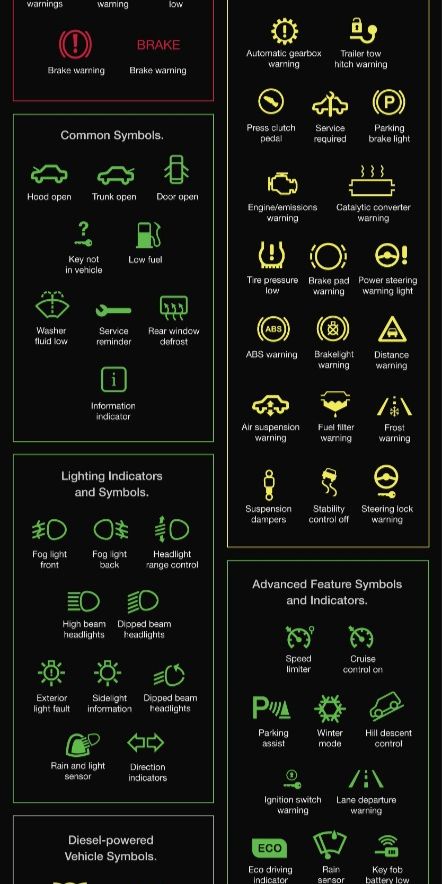
While the symbols described above are standard across the automotive industry, specific icons can vary slightly depending on the manufacturer and model. The best resource for decoding your particular dashboard is the owner’s manual that came with your vehicle.
Manufacturers often include a detailed diagram of all warning lights specific to that vehicle line. Keeping this manual in your glove compartment is a good practice, as it provides the definitive guide to every symbol you might encounter. Referencing it allows you to understand whether a light is a mere reminder or a critical safety alert.




Proactive Monitoring and Maintenance
Understanding dashboard lights is a reactive skill, but true vehicle ownership involves proactive monitoring. Regularly checking your dashboard during startup allows you to verify that all warning lights are extinguishing as they should after the self-test phase completes.
Additionally, adhering to a strict maintenance schedule—such as regular oil changes and coolant flushes—is the best way to prevent the very issues that trigger these warnings. By staying on top of service intervals, you significantly reduce the chances of being stranded by a light that could have been avoided with simple preventative care.
Related Articles
What Do Dashboard Lights Mean? Your Complete Guide to Car Warning Signs
Dashboard lights are the primary communication method your vehicle uses to alert you to its current status and potential problems. Understanding what dashboard...
What Do the Different Lights on Your Car Mean? Decode Dashboard Warning Lights
Understanding the language of your vehicle is essential for both safety and peace of mind. The array of symbols and lights on your dashboard acts as a direct...
Your Guide to Understanding Car Dashboard Lights: What They Mean
Stepping into your vehicle, you are immediately surrounded by a constellation of tiny icons on the dashboard. While these lights look similar, their meanings...

What Do the Lights on Your Car Dash Mean? Decode Dashboard Warning Signs
Modern vehicles are rolling command centers, and the dashboard is the primary interface between you and the complex machinery beneath the hood. Understanding...
What Do Dashboard Warning Lights Mean? Decode Your Car's Signals
Modern vehicles come equipped with a sophisticated array of dashboard warning lights and indicators that serve as the primary communication channel between...
Decode Dash Lights: Your Guide to What Different Dashboard Symbols Mean
Modern vehicles are rolling computers, and the dashboard is your primary interface for understanding their health. While the steering wheel and seats dictate...